Emergency Plumbing Repair Signs Every South Shore Homeowner Should Know
Reading time: 9 minutes
It’s 11 p.m. on a January night in Quincy, and you hear a strange gurgling sound coming from your basement. Do you call a plumber immediately, or wait until morning? For South Shore homeowners, that split-second decision can mean the difference between a $200 repair and a $12,000 water damage restoration bill. This guide breaks down exactly which plumbing symptoms demand a 2 a.m. phone call and which can safely wait for business hours.
Table of Contents
- Why South Shore Homes Face Unique Plumbing Risks
- The 7 Warning Signs You Can’t Ignore
- Emergency vs. Non-Emergency: A Practical Comparison
- Real Cases From Local Homes
- How Much Time You Actually Have
- Common Challenges Homeowners Face
- FAQs
- Your Emergency-Ready Roadmap
Why South Shore Homes Face Unique Plumbing Risks
Towns like Hingham, Scituate, Weymouth, and Marshfield sit on a mix of coastal clay, sandy soil, and aging infrastructure that dates back to the 1950s and 60s. Add New England’s brutal freeze-thaw cycles, and you get a perfect storm for pipe stress. According to the Massachusetts Water Resources Authority’s 2026 infrastructure report, roughly 38% of residential water lines in Plymouth and Norfolk counties are over 50 years old, putting them at significantly higher risk of sudden failure compared to newer builds inland.
Coastal proximity also means higher humidity and salt-air corrosion on exposed piping, particularly in homes within a mile of the shoreline. Local plumber Mike Donovan, who has serviced Cohasset and Hull for over 22 years, puts it bluntly: “Pipes here don’t fail gradually—they fail fast, usually right after the first hard freeze or during a spring thaw when the ground shifts.”
The Seasonal Factor Nobody Talks About
Winter 2026 has already brought three deep freezes to the region by early February, and emergency plumbing calls typically spike 60-70% during these events. Pipes running through unheated crawl spaces, exterior walls, or older basements are the most vulnerable. Homeowners who don’t insulate exposed piping before December often pay the price in January.
The 7 Warning Signs You Can’t Ignore
Not every drip is a crisis, but certain symptoms signal that damage is actively occurring or imminent. Here’s what separates a “call now” situation from a “schedule for next week” one:
- No water pressure anywhere in the house — often indicates a main line break or serious blockage
- Water stains spreading on ceilings or walls — active leak causing structural damage right now
- Sewage smell combined with slow drains — potential sewer line backup, a health hazard
- Water heater making banging or popping sounds — sediment buildup that can lead to tank rupture
- Frozen pipes with no water flow — risk of bursting within hours if not addressed
- Visible pooling water near the foundation — could indicate a slab leak or failed sump pump
- Multiple fixtures backing up simultaneously — almost always a main sewer line issue, not a single clog
Pro Tip: If you smell sewage but drains seem fine, don’t ignore it. Sewer gas leaks can indicate a cracked vent pipe, which is both a health and safety concern, not just a plumbing inconvenience.
What Happens If You Wait
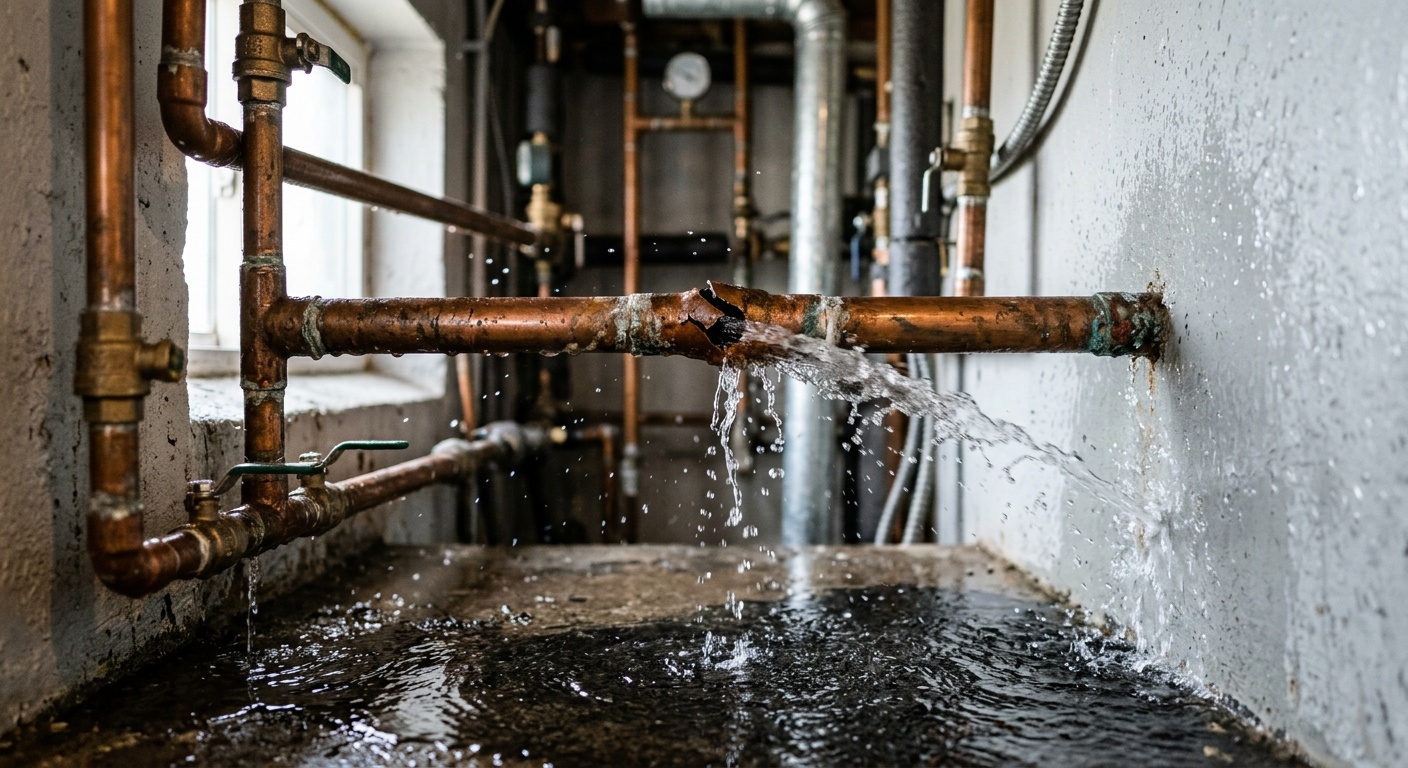
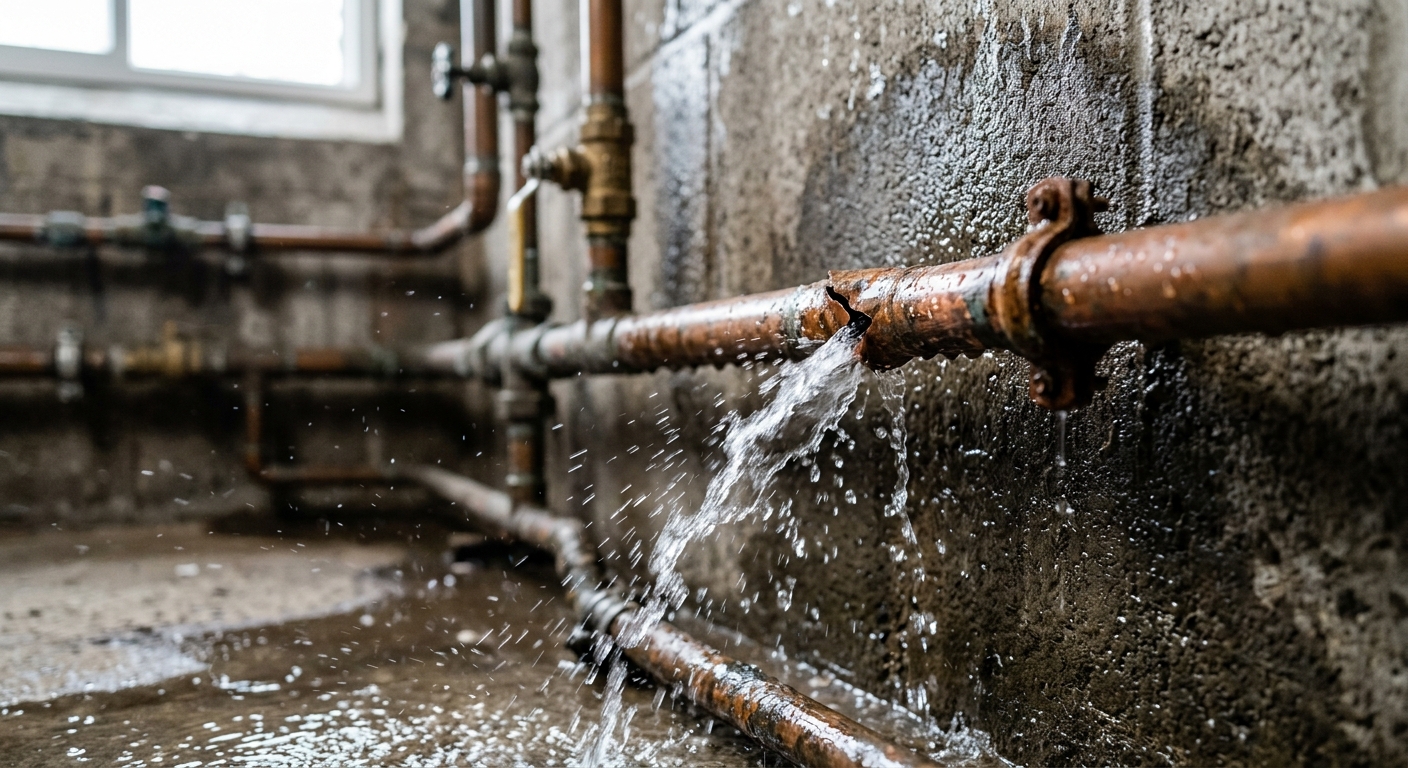
A frozen pipe left untreated for even 6-8 hours during a hard freeze can burst, releasing up to 250 gallons of water per hour into your home. That’s not an exaggeration—it’s the physics of pressurized water meeting a compromised pipe wall. Insurance data from 2025 claims across Plymouth County showed the average burst-pipe claim came in at $9,800, while catching the same issue early (before rupture) averaged just $450 in repair costs.
Emergency vs. Non-Emergency: A Practical Comparison
| Symptom | Urgency Level | Response Time Needed | Avg. Cost If Delayed |
|---|---|---|---|
| Burst pipe | Critical | Immediate (under 1 hour) | $8,000-$15,000 |
| Sewer backup | High | Same day | $3,000-$7,000 |
| Water heater failure | Moderate-High | Within 24 hours | $800-$2,500 |
| Single slow drain | Low | Within a week | $150-$400 |
| Dripping faucet | Low | Within a month | $50-$150 |
Real Cases From Local Homes
In November 2025, a homeowner in Braintree noticed a faint musty smell near her water heater closet but assumed it was just old basement air. Three weeks later, the tank’s corroded seam gave way overnight, flooding her finished basement with 40 gallons of hot water and ruining carpeting, drywall, and a home office setup. Total repair and restoration cost: $11,200. Her plumber later confirmed the popping sounds she’d heard—and dismissed—for two months were a textbook sediment warning sign.
Contrast that with a Duxbury family who noticed reduced water pressure in one upstairs bathroom during the January 2026 cold snap. They called a plumber within the hour. The technician found a partially frozen supply line in an exterior wall and thawed it safely before it cracked. Total cost: $275, and zero water damage.
The Cohasset Sump Pump Lesson
A third example worth noting: a Cohasset homeowner ignored a sump pump that had started cycling more frequently than usual during spring rains. When a nor’easter hit in March 2025, the pump failed entirely under the increased load, and the basement took on four inches of water. Regular sump pump testing—something that takes about five minutes—would have caught the failing motor weeks in advance.
How Much Time You Actually Have
Understanding the realistic timeline for different plumbing failures helps you prioritize. Below is a simplified visualization of how quickly damage tends to escalate for common South Shore plumbing emergencies, based on average industry response data.
Common Challenges Homeowners Face
Even when people recognize a problem, three obstacles commonly get in the way of a fast, effective response.
Challenge 1: Not knowing where the main shutoff valve is. In the chaos of a burst pipe, wasted minutes searching for the shutoff can mean hundreds of extra gallons on your floor. Solution: locate it today, label it, and make sure everyone in the household knows how to turn it.
Challenge 2: Assuming “it’s not that bad yet.” Homeowners often normalize small symptoms—slow drains, faint smells, odd noises—because the house still “basically works.” Solution: treat any change from normal plumbing behavior as worth a phone call, even if it’s just to a plumber’s after-hours line for advice.
Challenge 3: Choosing based on price alone during a crisis. In a panic, some homeowners hire the first available “24/7 emergency” service without checking licensing. Massachusetts requires plumbers to hold a state license (verifiable through the Division of Occupational Licensure), and unlicensed emergency work can void insurance claims. Always ask for a license number before work begins, even at midnight.
Building Your Emergency Prep Kit
A basic kit costs under $40 and can buy you critical time: a pipe wrench, waterproof tape, a wet/dry shop vacuum, and a laminated card with your plumber’s number and your water main location taped near the panel. Small investment, potentially thousands saved.
FAQs
How do I know if my pipes are actually frozen versus just low pressure from another cause?
Check multiple fixtures at once. If only one area has no flow and it’s near an exterior wall or unheated space, and outdoor temps have been below 20°F, frozen pipes are the likely cause. Gently warm the area with a hair dryer (never an open flame) and call a plumber if there’s no improvement within 30 minutes.
Is it worth paying for emergency after-hours rates, or should I just wait until morning?
It depends entirely on the symptom. For active flooding, sewage backup, or a burst pipe, the after-hours premium (typically 1.5x to 2x standard rates) is almost always cheaper than the water damage that accumulates overnight. For a slow drain or minor drip, waiting is financially smarter.
Can I prevent most emergency plumbing calls with regular maintenance?
Largely, yes. Annual water heater flushes, sump pump testing before storm season, pipe insulation before winter, and periodic sewer line camera inspections (especially in homes over 30 years old) address the root causes behind most emergency calls on the South Shore.
Your Emergency-Ready Roadmap
Plumbing emergencies rarely announce themselves politely—they show up as a strange sound, a faint smell, or a slightly slower drain weeks before the real failure hits. As South Shore homes continue to age and winters swing between deep freezes and sudden thaws, the homeowners who fare best won’t be the ones with the newest pipes, but the ones who act on early warning signs.
- Step 1: Locate and label your main water shutoff valve this week
- Step 2: Save a licensed local emergency plumber’s number in your phone today
- Step 3: Schedule a pre-winter inspection of exposed pipes and your water heater
- Step 4: Test your sump pump monthly during rainy or snowy seasons
- Step 5: Treat any unusual sound, smell, or pressure change as worth a phone call, not a shrug
So the next time you hear that odd gurgle at 11 p.m., you won’t have to guess. You’ll already know exactly what to do—and that confidence might just save your home. What’s the one plumbing warning sign in your house you’ve been putting off checking?