Preventing Water Damage With Smart Outdoor Drainage Solutions
Reading time: 9 minutes
Ever watched a summer storm turn your backyard into a swamp, only to find a wet basement waiting for you the next morning? You’re not alone. In 2026, water damage remains the single most common—and most preventable—cause of residential property loss, and the culprit is almost always outdoor drainage that was never designed for today’s rainfall patterns.
Let’s break down what’s actually happening beneath your lawn, why old-school gutters and gravel trenches aren’t cutting it anymore, and how homeowners are fighting back with smarter, sensor-driven drainage systems.
Table of Contents
- Why Outdoor Drainage Failure Is Accelerating
- The Real Cost of Ignoring Drainage
- Core Drainage Solutions That Actually Work
- Smart Technology Changing the Drainage Game
- Common Challenges and How to Overcome Them
- Comparing Drainage System Performance
- FAQs
- Your Roadmap Forward
Why Outdoor Drainage Failure Is Accelerating
Climate data from NOAA’s 2026 regional assessments shows a 12% increase in high-intensity rainfall events across the continental U.S. compared to the 2015–2020 baseline. That’s not a rounding error—it’s a structural shift in how much water your property needs to shed, and fast.
Here’s the straight talk: most residential drainage systems were engineered decades ago for a climate that no longer exists. A 1990s-era French drain sized for two inches of rain per hour is now regularly overwhelmed by three-inch downpours that arrive in under 40 minutes.
The Hidden Mechanics of Water Damage
Water damage rarely announces itself with a flood. It starts quietly—soil saturation near your foundation, hydrostatic pressure building against basement walls, and slow erosion under walkways. According to the Insurance Institute for Business & Home Safety, foundation-related water damage claims rose 18% in 2025, with the average repair cost reaching $14,200 per incident.
Regional Variability Matters
Not every yard faces the same risk. Clay-heavy soils in the Midwest retain water and expand, while sandy soils in the Southeast drain fast but erode quickly. A one-size-fits-all drainage plan almost always underperforms, which is why site-specific grading assessments have become standard practice among landscape engineers in 2026.
The Real Cost of Ignoring Drainage
Quick scenario: Imagine you’ve just bought a home with a beautifully landscaped backyard, only to discover after the first heavy rain that water pools against your foundation for hours. What’s actually happening, and what does it cost you long-term?
Dr. Elena Marsh, a civil engineer specializing in stormwater management, puts it bluntly: “Every dollar spent on preventive drainage saves roughly six dollars in future structural repair. Homeowners treat drainage as cosmetic landscaping, but it’s structural insurance.”
- Foundation cracking from hydrostatic pressure buildup
- Mold and mildew growth triggered by persistent basement moisture
- Soil erosion undermining patios, driveways, and retaining walls
- Mosquito breeding in standing water, a growing public health concern in 2026
Core Drainage Solutions That Actually Work
Well, here’s the reality: successful drainage isn’t about installing one magic product—it’s about layering complementary systems that handle water at different stages, from the roof to the street.
French Drains and Subsurface Piping
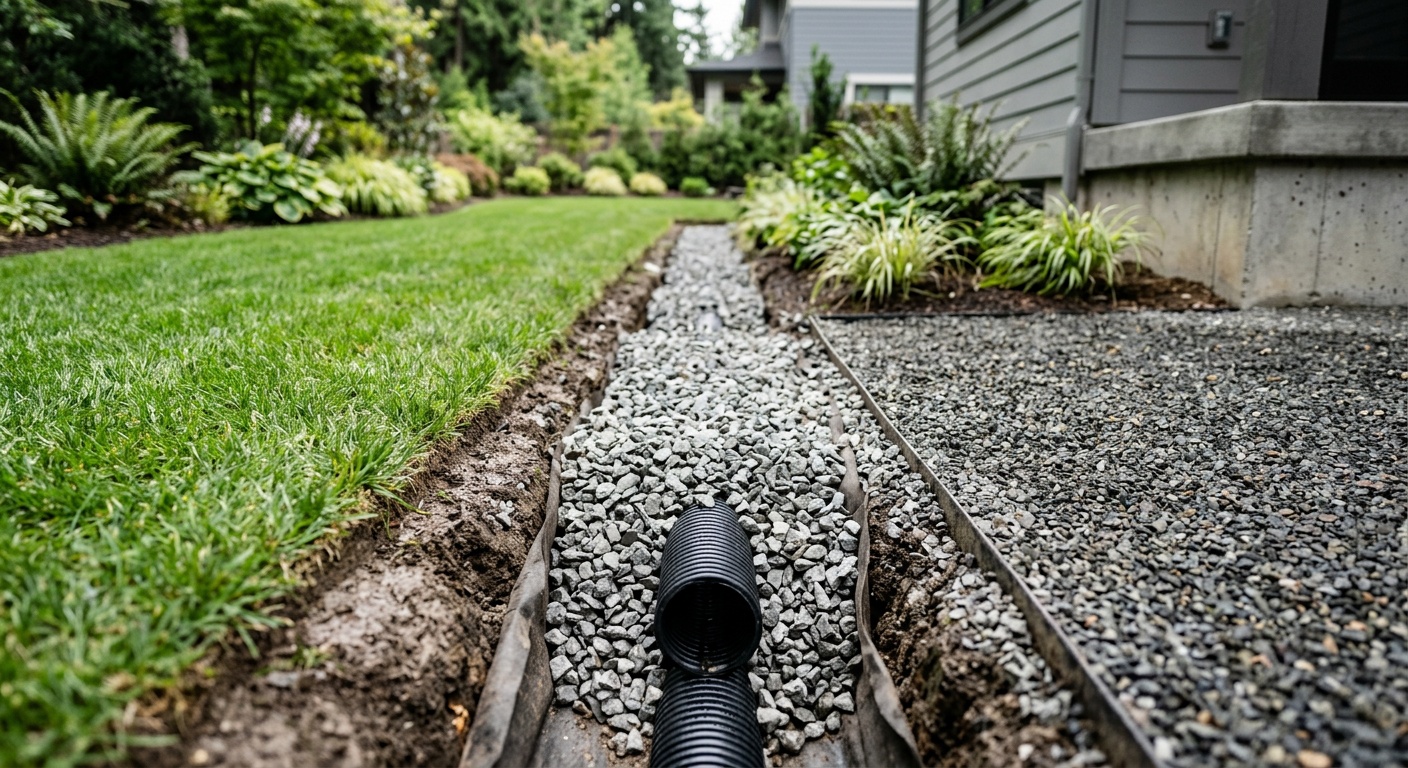
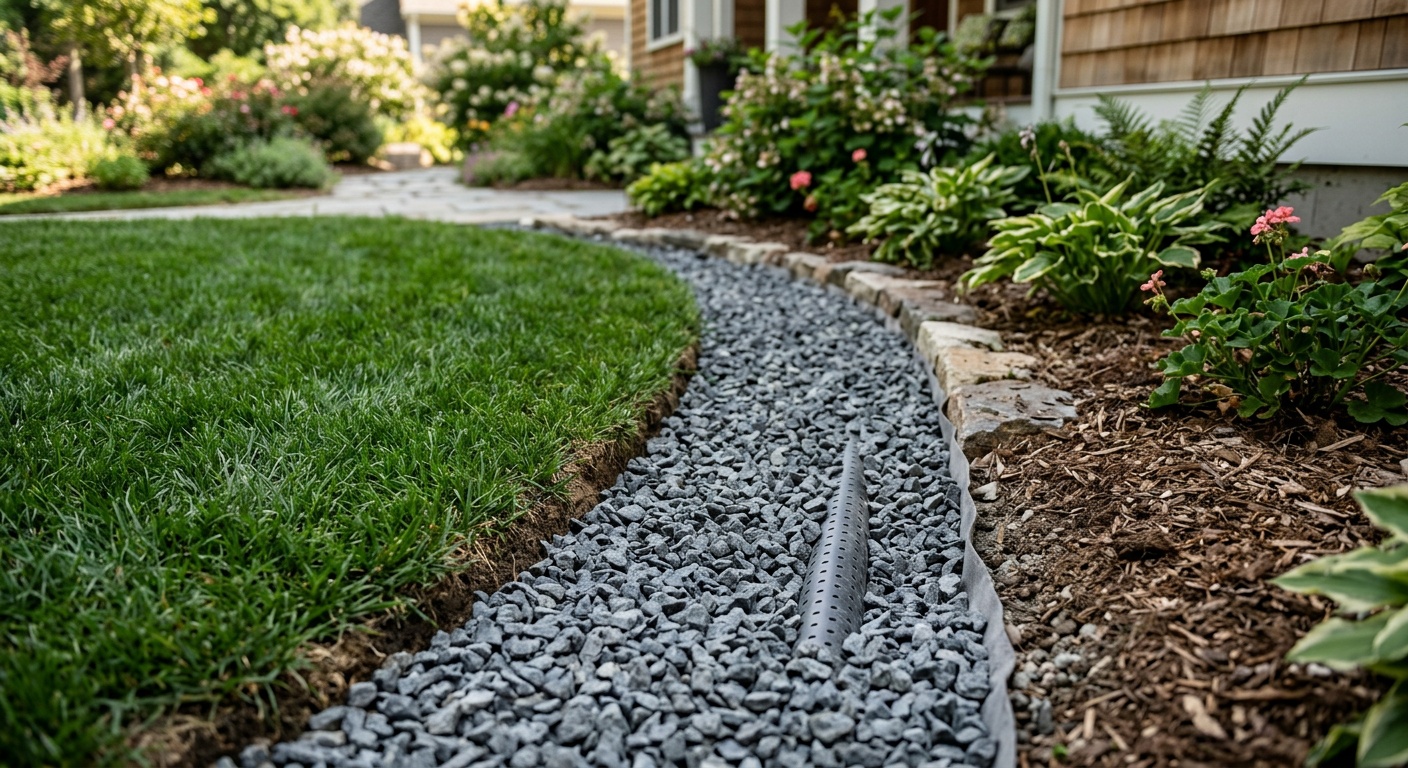
French drains remain a workhorse solution because they intercept groundwater before it reaches vulnerable structures. Modern versions use perforated PVC wrapped in geotextile fabric, which resists the silt clogging that plagued older gravel-only trenches.
Dry Wells and Detention Systems
Dry wells act like underground reservoirs, temporarily holding stormwater and releasing it slowly into surrounding soil. In dense residential areas where lot size limits runoff options, detention chambers have become a practical middle ground between full retention ponds and simple pipe drainage.
Permeable Hardscaping
Permeable pavers and gravel driveways let water infiltrate directly rather than sheeting toward your foundation. A 2025 case study from a Denver suburb showed that replacing traditional concrete driveways with permeable pavers reduced localized flooding complaints by 34% within one rainy season.
Smart Technology Changing the Drainage Game
Here’s where things get genuinely exciting. Smart drainage isn’t just plumbing anymore—it’s data.
In 2026, moisture sensors embedded near foundations now feed real-time data to smartphone apps, alerting homeowners before saturation becomes structural damage. Some municipal programs, including pilot projects in Austin and Charlotte, are integrating weather-predictive drainage valves that open automatically ahead of forecasted storms, pre-draining retention systems to maximize capacity.
Case Study: A homeowner in suburban Atlanta installed a sensor-linked sump and French drain combo in early 2025. Before installation, her basement flooded twice annually. After installation, paired with an app that tracked soil saturation levels, she experienced zero flooding events through the entire 2025–2026 rainy season—and cut her dehumidifier electricity costs by 22%.
Automated Grading Adjustments
Robotic grading tools, increasingly used by landscaping contractors, now use laser-guided leveling to ensure a consistent 2% slope away from structures—a precision that manual grading often misses by margins large enough to redirect water toward, rather than away from, your home.
Common Challenges and How to Overcome Them
Challenge 1: Clogged systems from debris. Solution: Install debris guards and schedule biannual inspections, ideally in spring and fall.
Challenge 2: Neighboring property runoff. Solution: Coordinate with neighbors or consult local ordinances; many municipalities now offer shared drainage easement programs to distribute costs fairly.
Challenge 3: Underestimating system capacity. Solution: Size systems for a 25-year storm event, not historical averages—a recommendation now standard in updated 2026 building codes across flood-prone states.
Comparing Drainage System Performance
| System Type | Avg. Cost | Lifespan | Best For | Maintenance Level |
|---|---|---|---|---|
| French Drain | $1,500–$4,500 | 20–30 years | Foundation protection | Low |
| Dry Well | $2,000–$6,000 | 25 years | Small lots | Low |
| Permeable Pavers | $10–$20/sq ft | 30+ years | Driveways, patios | Medium |
| Smart Sensor System | $500–$1,200 | 8–10 years | Early warning | Low |
| Detention Chamber | $4,000–$9,000 | 30 years | Dense neighborhoods | Medium |
Effectiveness Rating by Homeowner Survey (2026)
FAQs
How do I know if my yard actually needs a drainage upgrade?
If you notice standing water lasting more than 24 hours after rain, visible erosion near your foundation, or musty basement odors, it’s time for a professional grading and drainage assessment. Don’t wait for cracks to appear—by then, repair costs multiply significantly.
Can I install drainage solutions myself, or do I need a contractor?
Simple surface grading and gutter extensions are DIY-friendly. However, French drains, dry wells, and anything involving foundation waterproofing should involve a licensed contractor, since improper installation can redirect—not eliminate—the problem.
Are smart drainage sensors worth the investment in 2026?
Absolutely, particularly given how affordable and reliable they’ve become. At $500–$1,200 installed, sensor systems offer early warning that can prevent thousands in structural damage, making them one of the highest ROI additions to any drainage plan.
Your Roadmap Forward
Ready to transform your drainage anxiety into a resilient, storm-ready property? Here’s your practical action plan:
- Step 1: Schedule a site assessment to identify grading issues and soil type within the next 30 days.
- Step 2: Prioritize foundation-adjacent fixes—French drains or sump systems—before addressing cosmetic landscaping.
- Step 3: Add a smart sensor system for real-time monitoring, especially if you live in a region with increasing storm intensity.
- Step 4: Consider permeable hardscaping during your next driveway or patio renovation.
- Step 5: Review your drainage plan annually, adjusting for the shifting rainfall patterns climate data continues to reveal.
As storm intensity keeps climbing through 2026 and beyond, outdoor drainage is no longer a landscaping afterthought—it’s a core piece of home resilience strategy, on par with roofing and insulation. The homeowners who treat it that way today will be the ones without water stains, mold remediation bills, or foundation repairs tomorrow.
So, what’s standing water really telling you about your property’s future—and are you ready to listen before the next storm arrives?